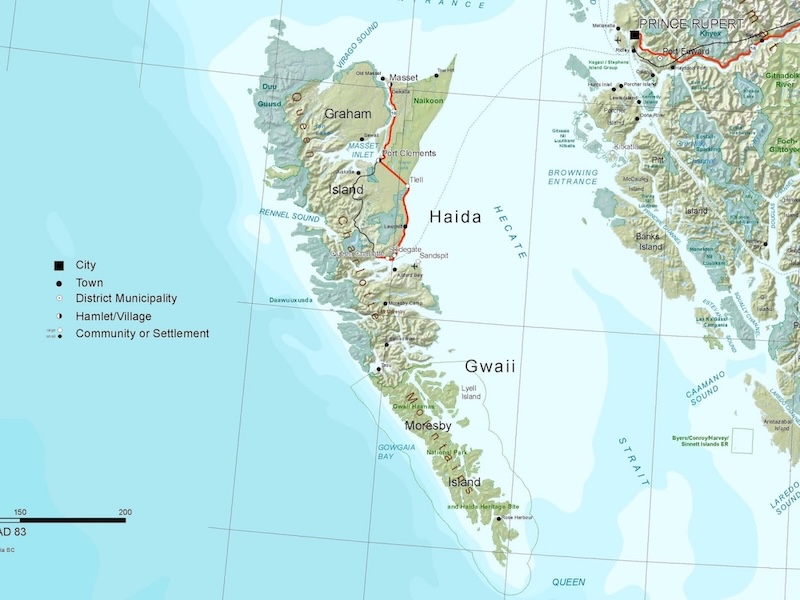
In the beginning, there were the stories, art, dances, and songs created by a strong and resilient people deeply connected to their natural world. The Haida people had arrived at an offshore island chain now known as the Haida Gwaii thousands of years before traders, priests, government officials, and scientists showed up to plunder their natural resources, remake their society, and study their culture.
The stories were the words that had been repeated and enhanced thousands of times over thousands of years. The art was the totem poles, masks, and argillite and copper carvings that told the story of the people, described notable events, and illustrated the myths and legends in vibrant detail. The dances and songs were the art that wove everything together into a tapestry of history that told the story of how the humans, plants, animals, sea, sky, and supernatural beings of the Haida Gwaii lived together, learned from each other, and ultimately defined what the phrase “everything depends on everything else” really meant on a windswept archipelago far from land.
Somehow all of it continued to exist despite the best efforts of outsiders to change it substantially or destroy it entirely.
The fact that the Haida were able to endure decades of trials and tribulations during their journey and emerged with their culture and history mostly intact is a testament to their strength and resilience, and the only reason I can tell this story.
Creation: Raven and the First Men
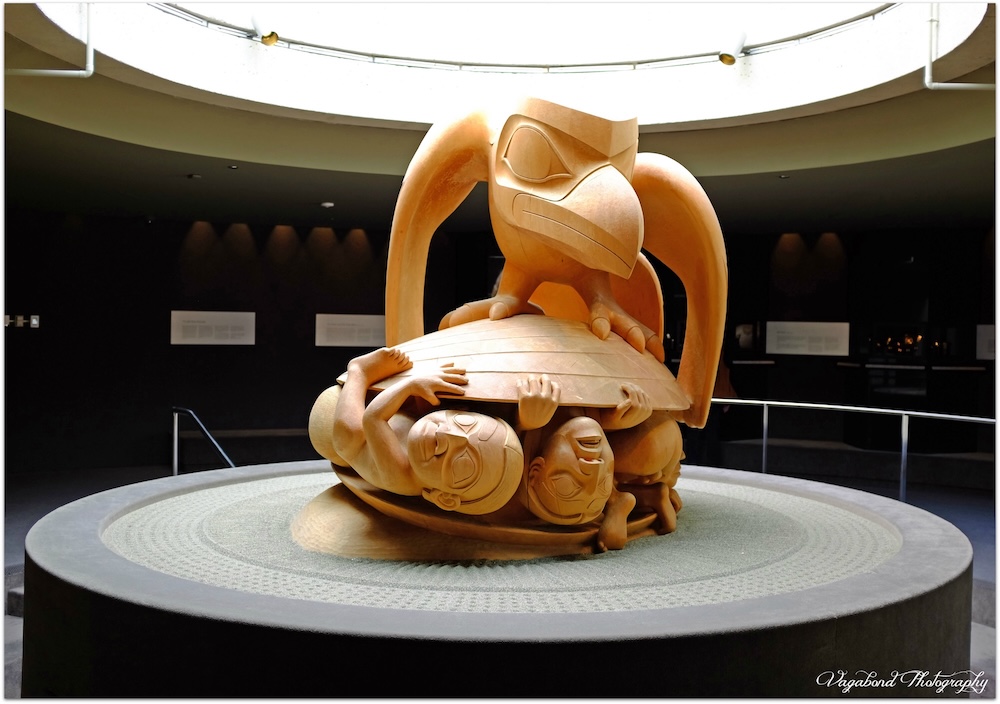
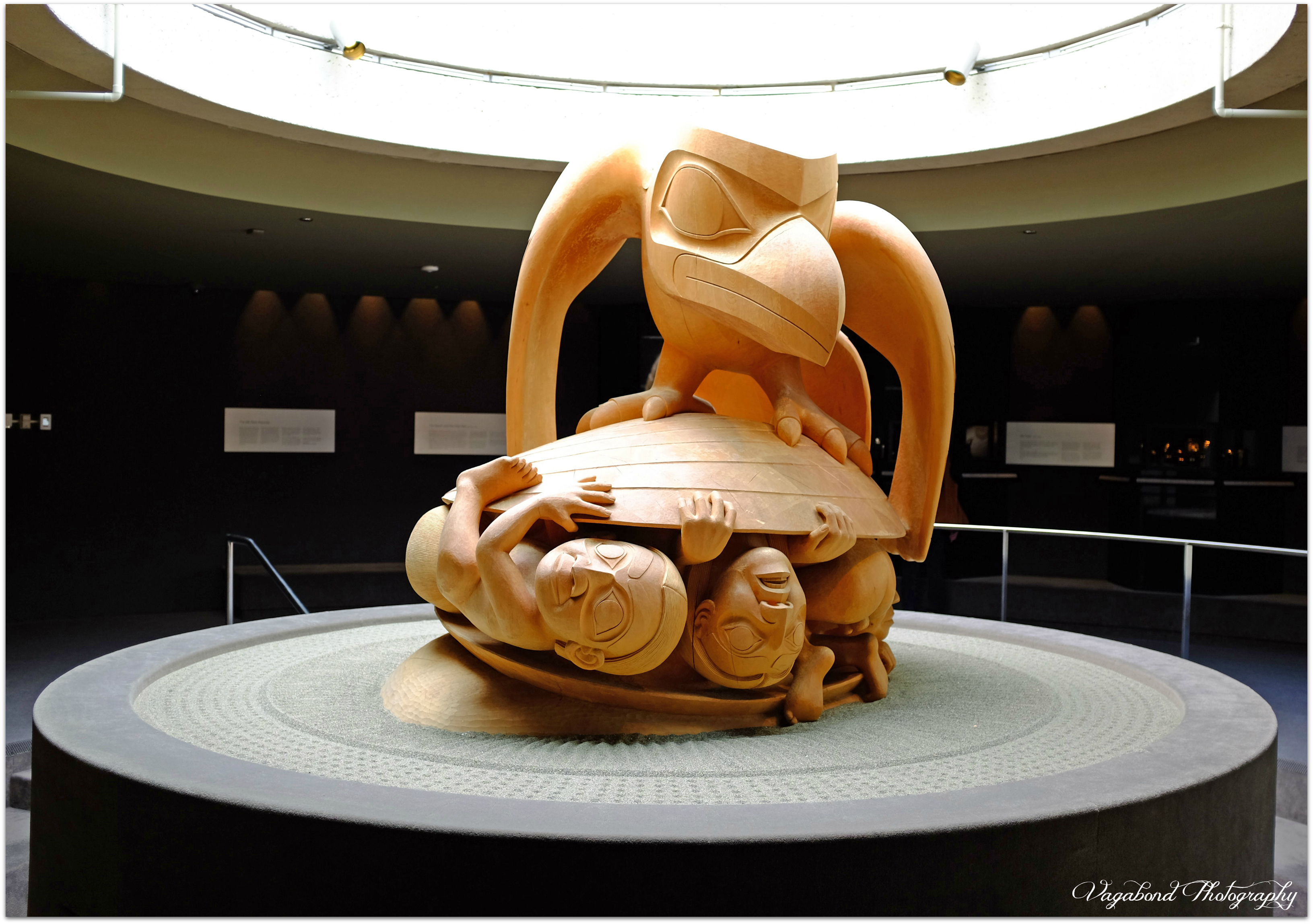
“The great flood, which had covered the earth for so long, had at last receded, and the sand of Rose Spit, Haida Gwaii, lay dry. Raven walked along the sand, eyes and ears alert for any unusual sight or sound to break the monotony. A flash of white caught his eye and there, right at his feet, half buried in the sand, was a gigantic clam shell. He looked more closely and saw that the shell was full of little creatures cowering in terror in his enormous shadow. He leaned his great head close and, with his smooth trickster’s tongue, coaxed and cajoled and coerced them to come out and play in his wonderful shiny new world. These little dwellers were the original Haidas, the first humans.”
How exactly these little humans arrived on the shores of Rose Spit is still a subject of discussion. What we do know is that the world of the early arrivers was significantly different from the one that I visited. The time described in Bill Reid’s story was likely the end of the last glacier maxima, occurring between 13,000 to 17,000 years ago, which may put the Haida civilization on par with places like Gobekli Tepe in Turkey, where archaeological evidence suggests human habitation dating back 12,000 years.
For over two million years, the Cordilleran ice sheet covered much of the northwest coast of the North America, extending from Alaska slightly beyond the current Canada/US border. Where I live on the Olympic Peninsula in northwest Washington state, the ice was over a mile thick. As it melted, a land passage eventually emerged that enabled migration from Asia to North and South America, but it is also possible there may have been an earlier sea route, the “Kelp Highway,” that closely followed the curve of the Bering Sea south along the coast of North America. If this theory of migration is correct, it’s possible the kelp highway ran right by the Haida Gwaii, thousands of years before the land route was open for business.
Regardless of how they arrived, the little humans were incredibly lucky to end up where they did.
They found themselves not on a vast expanse of mainland North America, but rather on a collection of large and small islands, an archipelago 80 miles from Canada’s western shore that even now is challenging to reach by boat or plane. It was a self-contained world that provided all the things needed for survival: an endless supply of food from the sea and land, raw materials to make shelters and useful tools and implements, and enormous trees that could be fashioned into dugout canoes that were used to fish, hunt marine mammals, and travel to distant places.
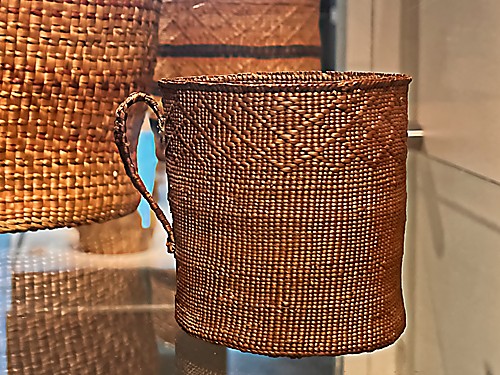
As they began to make this new home their own, the first humans developed a sustainable approach to living that recognized the importance of all things – humans, animals, land, plants sea, sky, and spiritual beings. In their world, humans were a small part of a much larger web of life, and lived with humility, gratitude, and respect for all things, taking only what they needed for survival. This ethos was called Yah’guudang and is a fundamental part of Haida life today.
The stories, art, songs, and dances are a portal into the past and a roadmap for the future that is extremely relevant and important – especially now.
I have stood on the beach near Rose Spit, the place of Haida creation, and looked out to sea to the place where supernatural beings still live, according to our Haida guide. Perhaps they are the ghosts of the people who lived in a village near the sea in ancient times when the ice was still present and water levels were much lower. Or perhaps they are something much more. No matter what you believe, the power of the place is palpable; it feels ancient yet vibrant, mysterious, and important, but just beyond reach. As we got close to Rose Spit, we walked through a place called Strawberry Fields, where seasonal plant gathering still takes place. As we walked along, in a strong voice, our young Haida guide sang an ancient song taught to him by his grandmother. It was meant to honor his past (and let the bears know we were there).
A century ago, the Haida culture was almost lost.
But before we discuss that, let’s look at the culture the Haida created over thousands of years.
Social Organization: The Moieties of Raven and Eagle
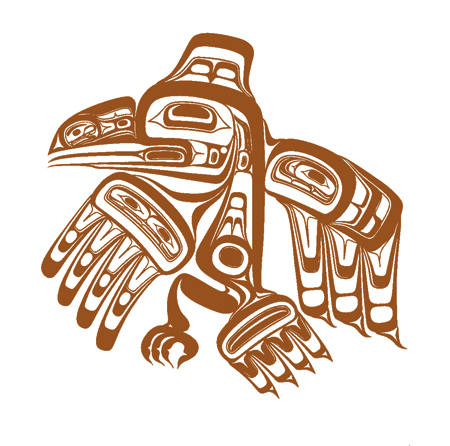
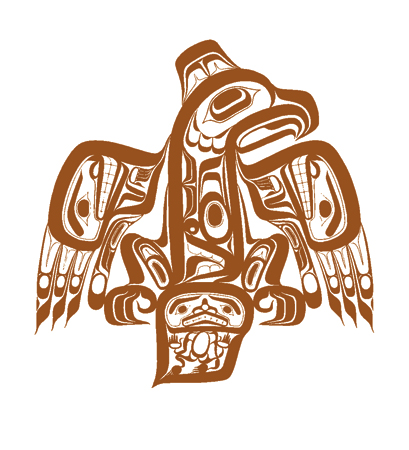
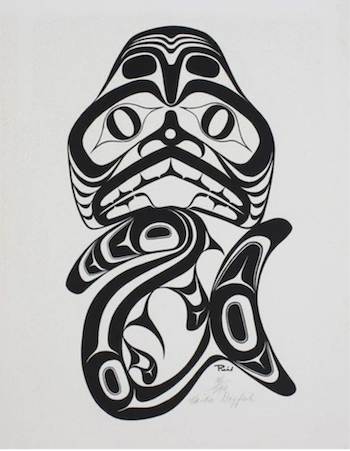
Haida Raven and Eagle by Bill Reid
In the ancient times, the first Haida began the creation of a nature-centric culture that was built upon respect for the sea, land, sky, and supernatural beings that inhabited those places and intervened, at times, in the lives of the Haida. It was a matrilineal society where bloodlines, leadership, and wealth flowed from the mother’s side of the marriage. People were identified primarily as members of either the Raven or Eagle moieties, and each moiety was a collection of clans represented by features of their natural world. On the Raven side, the clan crests might include killer whales, bears, the new moon, cumulus clouds, dogfish, sea stars, or sea lions. On the Eagle side, crests included eagles, beavers, sculpin fish, frogs, hummingbirds, and whales. Personal names belonged to clans and were passed down from generation to generation.
As the population increased, the people spread out across the archipelago, establishing villages throughout the two larger islands, Graham and Moresby, as well as the smaller islands just offshore. Although widely dispersed, they stayed connected with each other through gatherings called potlatches. During a potlatch, the Haida would assemble to work out political issues, celebrate important events, exchange gifts and property, and enable the host chief to demonstrate his wealth and generosity.
Because of their isolated setting, the Haida Gwaii is home to plants and animals found nowhere else and the collection of islands is often called the “Canadian Galapagos.” Likewise, the Haida language is known as a “linguistic isolate” because it has no known genetic relationship to any other language family. The Haida traveled widely along the coast of North American – some of their stories suggest as far south as Peru. Their canoe exploits earned them the name, “Lords of the Sea,” along with the admiration, respect, and fear of other tribal nations. As we will see, their remote location provided protection from outsiders for many thousands of years until European explorers arrived in search of riches. Revealed to the world, the Haida society endured many hardships that will be discussed in Part 2 of this story.
The Stories
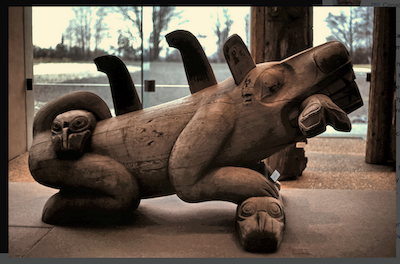
Haida stories and myths are often multilayered affairs that describe how humans interacted with a host of supernatural beings that lived on the land, in the sky, or in the sea. Stories from “myth world” often involve a character who embarks on a journey to a far-away place, helped along by supernatural beings or by the protective talismans they provide. In the end, the traveler completes the journey after learning something profound – a lesson important enough to be told and retold to future generations. In one of my favorite stories, a lazy son-in-law dons the skin of a Wasco (a sea wolf that is part wolf and part killer whale) to bring home food for his family, much to the astonishment of his scornful mother-in-law. Other stories may include important supernatural female characters, like Foam Woman, Copper Woman, Dogfish Woman, and Mouse Woman. Raven, the trickster is featured prominently, and many of the animal inhabitants of Haida Gwaii are an important part of Haida myth world, capable of shape shifting from animal to human form and back again.
A wonderful collection of a Haida myths and stories can be found in The Raven Steals the Light by Bill Reid and Robert Bringhurst. In it, the reader is treated to the exploits of Raven, an eternal being responsible for bringing light to the world, and the streams and lakes to the Haida Gwaii (that he stole from the mainland). Raven is the maker of much mischief to the animals and people, especially when he is bored. It is no coincidence that Raven is one of the two moieties that define Haida culture, given his prominent role in Haida history.
Only a Haida can truly understand the deeper meaning of these stories and their characters.
But everyone should read them.
The Art, Dance, and Song
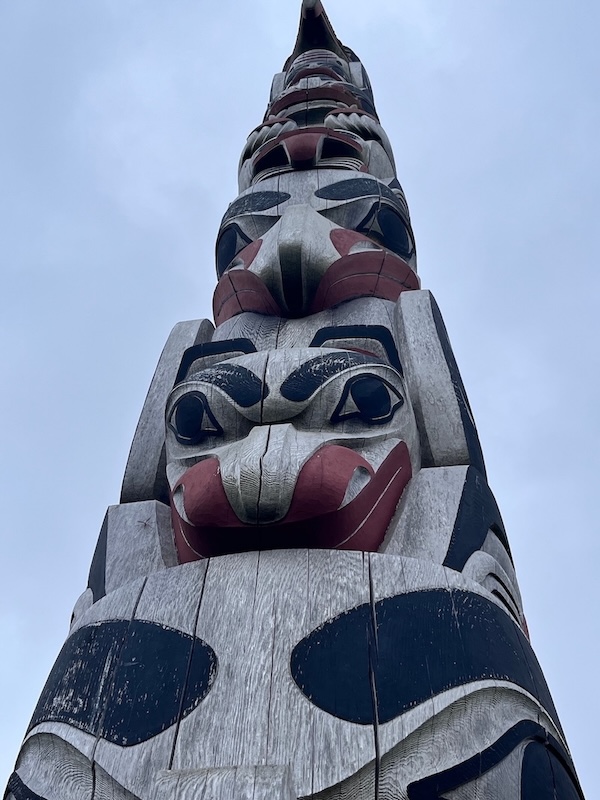
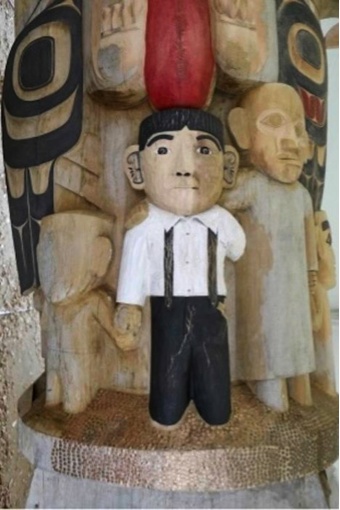
When I visited Haida Gwaii, I spent a long time in the largest room of the Haida Heritage Centre in Kay Llnagaay/Skidegate looking at their collection of totem poles recovered from villages abandoned over a century ago when smallpox decimated the island populations. Although the size of the room was impressive, a few of the totems were so tall they had to be cut into sections to fit into the available vertical space.
As I sat there quietly, trying to make sense of the carvings, I remembered something Robert Davidson said about them in the book Eagle Transforming:
“The totem pole is a declaration, a document. The totem displays the images that are our crests. It documents events in a family’s life, in the village’s life, in the history of the people. It displays the wealth of a clan and a clan’s accomplishments, and lays claim to the crests that it displays. Sometimes, poles illustrate legends. Like a play or a movie, a legend is made up of a series of scenes, so a legend can be illustrated by depicting any one of many different scenes. Since, in the past, the totem pole was the only formal visual document, I cannot overstate its importance in our development as a nation.”
Try as I might, I couldn’t understand what the totems were trying to tell me. It was difficult to identify the figures and understand the stories they told. So instead, I simply sat in their presence and let myself be drawn into the power of the art.
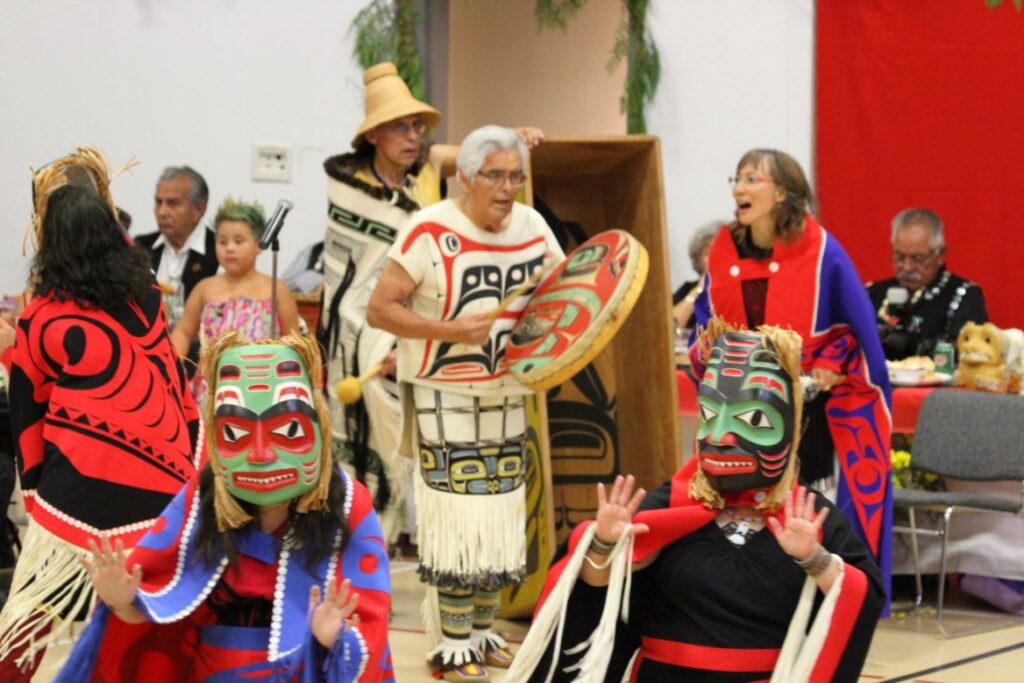
Haida dances and songs were, and still are, an important part of their culture. Dances and songs are an essential part of potlatch and used to celebrate births and marriages, honor departed members, and remember major accomplishments, old stories, and myths. The dances and songs put the stories into motion, complete with costumes and masks to enhance the telling. Many examples of this art form were lost during the time of a potlatch ban imposed by the Canadian government from 1855 to 1951. Unlike the stories, which were documented to some extent by European anthropologists at the beginning of the 20th century, the recollections of the dances and songs began to fade after smallpox decimated the population. Those that survived served as the basis for a new generation of singers and dancers wearing garments and masks created by contemporary Haida artists.
Everything Depends on Everything Else
“On the lands and waters of Haida Gwaii, we experience the interconnectedness of everything. Here, climate is not an isolated phenomenon, food is part of a complex and intelligent ecosystem, and humans are part of nature. For millennia, the Indigenous peoples of the coastal Pacific Northwest thrived, living with one foot in the forest and one on the shore, gathering the abundance of both and remaining an integral part of this ecosystem.
~Marcela Faralhi Daolio, Pacific Institute for Climate Solutions
Within and outside of Haida myth world, there is a unifying theme of connection that is present in the stories, art, and dance that seamlessly integrates the land, sea, and sky into the whole. Only in myth world could a traveler encounter supernatural beings, shape-shifting animals, and mysterious, mystical places that seem to blur the lines between one reality and another. This view of connectedness meant the Haida lived in and with nature and fully understood that they did not own the land — the land owned them.
Unfortunately, as we will see in Part 2 of this story, Haida society was dramatically altered when European explorers began to appear in the late 1700s. The first visitors were “Takers” who made themselves wealthy by exchanging cloth, tools, and other items of interest to the Haida for sea otter pelts worth a fortune. As time went on, the Takers came to believe the resources of the Haida Gwaii belonged to them, because they “discovered” it.
Not long after the arrival of the Takers, another group of newcomers I call the “Changers” appeared in the form of priests, missionaries, and government officials. They did not see an independent, fully functioning, highly evolved civilization. Instead, they willfully ignored the culture and traditions that had existed for thousands of years and tried to replace them with something foreign and strange to the Haida. Ancient practices were outlawed, traditional dress was illegal, and the idea that the Haida had sovereignty over their lands was treated with scorn and ridicule.
The damage they caused still reverberates through Haida society to this day.
The arrival of the “Learners” in the early 1900s had both positive and negative impacts on Haida society. The work of some of the learners, like John Swanson and George Dixon, helped preserve Haida history and revealed the genius of their art and culture to the world. Others came in the name of science and learning, but left with artifacts from abandoned villages, including bones of ancestral Haida, that have still not been returned.
The trials and tribulations the Haida endured with the arrival of the Takers, Changers, and Learners have already become a part of new oral stories that join the old. Future generations of Haida will learn from their elders how their people were able to resist and overcome one of gravest challenges to their existence, which is discussed in Part 2 of my story.
Information Sources
Aboriginal History Haida Nation, Indigenous Tourism.
7 Things You May Not Know About Haida Gwaii, Russell Markel, January 22, 2019.
A Post-Glacial Sea Level Hinge on the Central Pacific Coast of Canada, Duncan McLaren et al., Science Direct, Quaternary Science Reviews.
A Watchman Explains Haida Worldview on Matriarchy and Success as a Society, Explore Canada, July 29, 2011.
Charles Edenshaw: The Raven, The Sea Bear and Other Stories, Katherine Stauble, National Gallery of Canada, March 3, 2014.
Clovis Debunked: America’s First Settlers Did Not Take the Ice-Free Corridor, Big Think, April 11, 2022.
Cordilleran Ice Sheet, Wikipedia.
Creation of Haida Gwaii, Narrated by GwassGanad (Diane Brown, Haida, Canadian Museum of History.
Culture Summary: Haida, Margaret Blackman.
Current Evidence Allows Multiple Models for the Peopling of the Americas, Potter et.al., ScienceAdvances, August 8, 2018.
Debbie McLavey, Haida Dancer, Spirit Song, Citizen Stories.
Did the First Americans Take a Ride on the Kelp Highway?, National Geographic, November 8, 2017.
Everything is Connected: Supporting Indigenous Climate Resilience in a PICS Summer Internship, Marcela Faralhi Daolio, December 11, 2024.
Family Relations and Clans, Íihlx̱aadas húus x̱íinaangslaang.
Haida, The Canadian Encyclopedia, Published October 24 2010, Updated October 8 2024.
Haida, Canada History, History Tours.
Haida Mythology, Lebarty Mythlogy & Folklore.
Haida Mythology, Mythosphere, Folklore Earth
Haida Gwaii – Masset and Raven Story, gdare, September 18, 2022.
Islands at the Edge, Preserving the Queen Charlotte Islands Wilderness, Islands Protection Society, 1984.
Kiusta Village: Millennia of First Nations History and Culture Passed to the Next Generation, Ancient Origins.com.
Kung (Haida Village), Wikipedia.
Last Glacial Maxima Refugia, Wikipedia.
Late Pleistocene Palaeoenvironments and a Possible Glacial Refugium on Northern Vancouver Island, Canada: Evidence for the Viability of Early Human Settlement on the Northwest Coast of North America, Science Direct, Quaternary Science Reviews, Volume 279, 1 March 2022,
Laurentide Ice Sheet, Wikipedia.
Longest Early Human Migration was From Asia, and it Shaped the Americas, Evrim Yazgin, Cosmos, May 16, 2025.
Part VII Totem Poles, Department of Museum Volunteers
Pleistocene Epoch: The Last Ice Age, Live Science, Kim Ann Zimmermann and Patrick Pester, February 28, 2022.
Prehistory of Haida Gwaii, Canadian Museum of History, The People of the Land.
Raven and the Haida People, Under the Influence!, April 11, 2018, Ztevetevans.
Raven Finds the First Men, A Raven Tale as told by Eldrbarry, Barry McWilliams, 1997.
Reading a Haida Clan Crest Totem Pole, Teresa DeWitt and Dr. Lauren Kilroy-Ewbank, SmartHistory.
Robert Bringhurst: Myth Is a Theorem About the Nature of Reality, Matthew Spellberg interviews Robert Bringhurst, Lit World, May 145, 2014.
The Coastal Migration Theory: Formulation and Testable Hypotheses, Loren G. Davis and David B. Madsen, Quaternary Science Reviews, Volume 249, 1 December 2020, ScienceDirect.
The Epic Art of the Haida Mythtellers, Matthew Spellberg, Los Angeles Review of Books, October 10, 2013.
The Haida | Indigenous People of Canada, HistoryRise, January 26, 2025.
The Haida People, Weebly.com.
The Queen Charlotte Islands – 1774-1966, Kathleen E. Dalgell, Archive.org.
The Raven and the First Men: From Conception to Completion, The University of British Columbia Museum of Art, January 9, 2020.
The Raven Steals the Light, Claude Lévi-Strauss with Drawings by Bill Reid, Douglas and McIntyre, University of Washington Press, 1984.
The Wild West—Chaos at the end of the Ice Age. The Demise of the Cordilleran Ice sheet and the Birth of British Columbia as We Know It, Whistler Naturalists, NatureSpeak Articles, February 16, 2024.
Yah’guudang: the Principle of Respect in the Haida Legal Tradition, The Free Library.


3 Comments
Darko · October 24, 2025 at 1:19 pm
Thank you for linking my personal blog to this post. What a magnificent place Haida Gwaii is!!! Almost out of this world, like it’s existence is somehow linked only to those who want to listen…
Just one small thing, if you can fix a typo on a link to my post, it is “gdare” not “gdate”.
Haida Gwaii – Masset and Raven Story, gdate, September 18, 2022.
Jeff Ward · October 24, 2025 at 5:27 pm
Thanks very much! I will fix the weblink right away!
Jeff
Jeff Ward · October 24, 2025 at 7:32 pm
I think you have it right about the magic of the place- well said. The journey last year was a transformational experience for my wife and I, and it has fundamentally changed my approach to environmental writing.